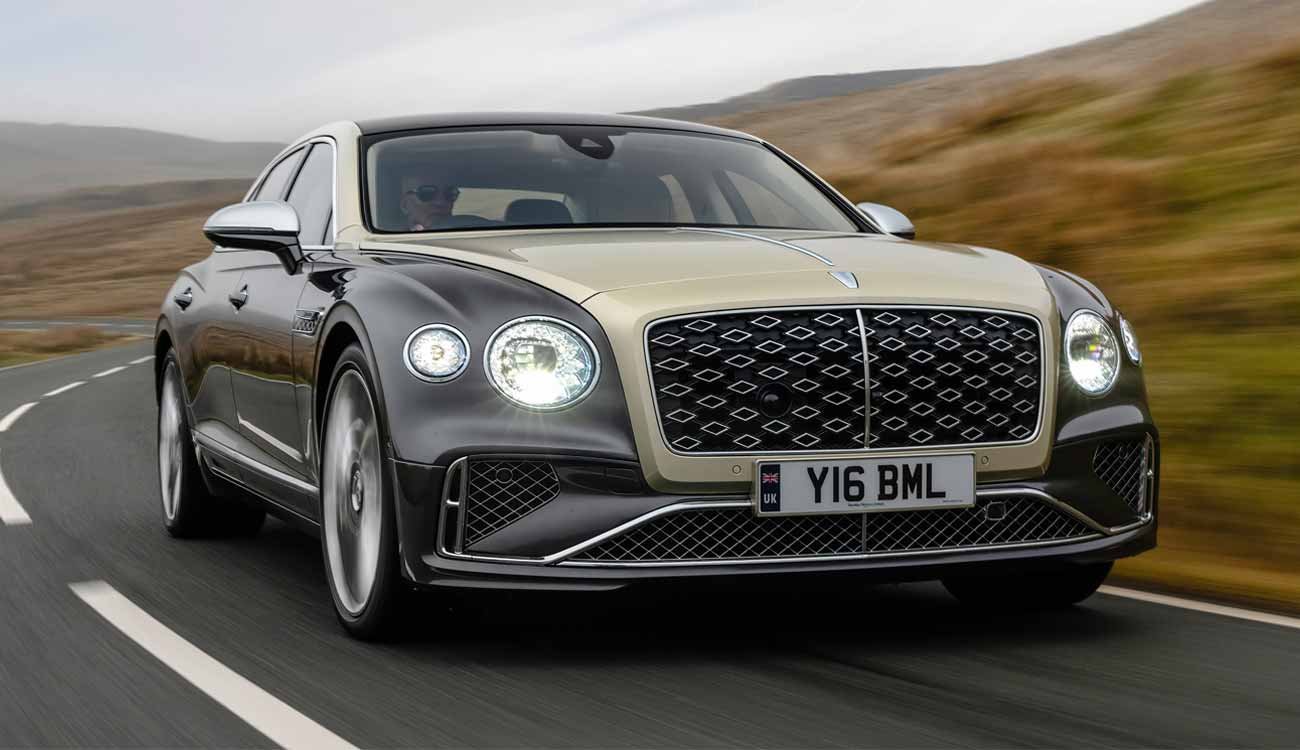
In a significant strategic shift, Bentley Motors has confirmed it will continue to develop and offer traditional petrol engines for its core models, even as it accelerates toward an electric future. This move reflects a broader industry-wide recalibration in response to evolving market demands for luxury vehicles.
Contrary to earlier plans that envisioned purely electric or plug-in hybrid successors for its famous trio—the Continental GT, Flying Spur, and Bentayga—the British marque will now also produce new generations with internal combustion engines. This decision ensures that petrol power remains a key part of Bentley’s lineup for the foreseeable future.
Listening to the Luxury Customer
The pivot stems from a clear signal from the market. Frank-Steffen Walliser, Chief Executive Officer of Bentley, explained that customer enthusiasm for luxury electric vehicles has not grown as rapidly as initially projected.
“The luxury market is a lot different today than when we announced our Beyond100 strategy,” Walliser stated in an interview. “There is a dip in demand for luxury electric vehicles, and customer demand is not yet strong enough to support an all-electric strategy. Electrification is still our goal, but we need to take our customers with us.”
This customer-centric approach is a hallmark of Bentley’s philosophy. The company recognizes that for many of its clients, the visceral experience of a powerful, refined petrol engine is an integral part of the ultra-luxury ownership proposition—a sentiment that cannot be overlooked.
A Phased Approach to Electrification
While reaffirming its commitment to petrol, Bentley is not slowing its electric ambitions. The company’s revised plan is a pragmatic, two-track approach:
- Electric Debut in 2026: The first all-electric Bentley will debut in 2026, confirmed to be a new category for the brand: an “urban SUV.”
- Annual New Launches: From 2026 onward, Bentley promises to introduce a new plug-in hybrid or fully electric model every single year.
- Revised End Date for ICE: The original target of becoming a fully electric brand by 2030 has been officially pushed back to 2035.
This staggered rollout allows Bentley to continue investing heavily in its Crewe headquarters, where new facilities for EV assembly, a paint shop, and a design studio are being developed, all while continuing to refine its legendary petrol powertrains.
A Volkswagen Group Trend
Bentley’s strategic shift is not happening in a vacuum. It is part of a larger pattern within the Volkswagen Group, its parent company. Recently, sister brands like Porsche and Audi have also delayed their electrification targets, citing similar market conditions.
This interconnectedness is crucial. As Walliser noted, Volkswagen Group brands share platforms, drivetrains, and key components. Therefore, major investment and strategy decisions made at the group level in Germany have a direct impact on the operations and product planning of the Crewe-based brand. This collective pause suggests the entire auto industry is navigating a more complex and gradual transition to electrification than previously anticipated.
In essence, Bentley is charting a course that honors its heritage without abandoning innovation. By offering both cutting-edge electric vehicles and newly developed petrol engines, the brand aims to satisfy its diverse global clientele today while building the infrastructure and technology for tomorrow.